Meet Our EGAs: J. Abraham Hanze—Coast-to-Coast Complex Claims & Specialty Risk Adjuster

J. Abraham Hanze, AIC, PTC, VP – Executive General Adjuster
June 4th 2026
Davies’ Executive General Adjusters are elite among Large Loss & Specialty claims adjusters in the U.S., handling the most complex and costly claims nationally and internationally. In this series, learn more about who they are, what they do, industry trends they’re seeing, and the most interesting project each has worked on to date.
J. Abraham Hanze
Quick Background
Since 2017, Abe has handled claims in the complex, large-loss, and multi-location commercial property and finance (BI/EE) spectrum for admitted and non-admitted carriers, delegated claims authority and third-party administrators, Lloyd’s syndicates, self-insured entities, captives, general counsel, and risk managers.
His expertise includes handling claims for nominated accounts in the following industry-specific risks: industrial, supply, and specialized warehouses, food service, mercantile, malls, and shopping centers, hospitality resorts and hotels, habitational real estate such as apartment complexes, assisted living facilities, timeshares, HOA/COAs, not-for-profits institutional centers, municipalities, places of worship, medical and healthcare facilities, specialty construction (such as historical buildings and high-rises), entertainment sporting arenas, recreational amusement parks, renewable and non-renewable refineries/farms, and many more.
Home: Greater Orlando Area, FL
States Covered: All 50 states, including Alaska, Hawaii, and Puerto Rico
Certifications: General Contractor, Roofing Contractor, Pool Contractor, Photovoltaic (Solar) Contractor, and Electrical Contractor
Languages: Spanish (Fluent) & Portuguese (Proficient)
Throughout his work, Abe focuses on managing complex property losses through structured analysis and precision, breaking claims into macro and micro levels to ensure accuracy and fairness.
Q&A
You’ve handled property claims that cost hundreds of millions of dollars. What are the biggest challenges you face when managing large complex losses, and how do you ensure accuracy and fairness under that level of pressure?
To be honest with you…losses that are hundreds of millions of dollars are not the problem; the adjuster is. These losses are few and far between; they’re daunting. The adjuster approaches them overwhelmed, often intimidated and frightened of what’s to come. And more often than not, the adjuster is receiving them along with a massive influx of claims since large losses are usually associated with catastrophes. Something I say about the adjusting profession comes to mind: “Adjusters wish to receive claims until they pray for the claims to stop.”
Back to the subject at hand, though. The key is learning how to process complexity without becoming overwhelmed by it. I approach these large losses from a macro perspective first, identifying the core drivers, quantifying the exposure, isolating the causation issues and then recalibrating into a micro perspective where every line item, scope consideration, engineering opinion and coverage issue is validated independently. Finally, I apply coverage, whether broad or restrictive.
At the end of the day, even in the most complex losses, the adjuster should be able to condense it into one sentence. If you can’t do this, chances are you’re over your head. Now, for legal purposes, we “draft” dozens of pages-long reports that explain each “check” in the box that needs to be triggered prior to a “check” to be “drafted” for payment. Without insurable interest, proper valuations, review of concurrent causation, confirmation of warrants and other insurance principles and competing theories of damage reviewed, we cannot move forward with a proper file closure.
You’ve worked with a wide range of properties—from hospitals and historic buildings to energy facilities and amusement parks. How do you adapt your adjusting approach for such diverse risks?
Let the property speak to you—not the other way around.
The adjuster should be inquisitive, not judgmental. A residential loss is not adjusted like a commercial loss, which is not adjusted like an industrial, healthcare or renewables loss.
If you approach with the correct questions, the claim will often answer itself and naturally progress towards amicable resolutions.
How have your multiple contractor licenses (general, roofing, pool, solar, electrical, etc.) influenced the way you investigate losses and communicate with insureds, contractors and carriers?
My construction background fundamentally changes the way I approach claims.
Most adjusters operate primarily as fact witnesses, documenting what they observed, what was reported, and what experts concluded. My contractor licenses allow me to independently analyze building systems, sequencing, constructability, repair methodologies, scope development and feasibility, and real pricing in real time.
That changes conversations significantly. Contractors tend to communicate differently when they know the adjuster not only understands means and methods but has done it themselves. Insureds gain confidence when they hear and then see the conversation unfold with utmost respect and professionalism. Carriers benefit from stronger scope validation, more accurate reserve consideration, and better identification of legitimate versus inflated damages.
In what ways has your experience as a Navy and Marine Corps veteran—and particularly as a Fleet Marine Force Leader—shaped your leadership style and decision-making as an EGA?
The Navy and Marine Corps made me the man I am today.
My leadership style is simple: cold and calculating with operations, warm and empathic with people. Mission first, people always.
Looking back on your path from trainee to EGA, what advice would you give to adjusters who aspire to work on large-loss or highly specialized claims like the ones you manage today?
Find the one thing you’re better at than anyone else and sharpen that spear, relentlessly.
The industry rewards specialists. Whether it’s construction, business interruption, renewable and non-renewable energies, investigations, policy interpretation, complex negotiations, subrogation, large loss quantification, litigation, handling a specific type of peril, or any other valuable adjusting subspecialty. These skills will make clients ask for you to be assigned to files, specifically. That hyper-specialization becomes your reputation, and your reputation doubles as your momentum.
At the same time, be a lifelong learner. You will be able to learn something from everyone, no matter their level, position or side.
What have been your most interesting projects to date?
Some of the novelty themed restaurants such as the one shaped like a ship located in the middle of the world’s most famous amusement park, among others. Being involved in the loss for a sports stadium that’s home to one of my favorite teams. A chemical processing plant I see every time I drive a certain Florida highway. The times I’ve had to use my military secret clearance to access certain sensitive areas.
But none of them beat getting to see how a globally recognized yacht company makes their beautiful giants. Seeing the engineering, workmanship, production, and testing behind luxury yachts—still built under the same ownership and leadership—was remarkable. It reminded me of other iconic craftsmen such as Enzo Ferrari, Ferruccio Lamborghini, and Salvatore Ferragamo. I still wear the same epoxy-stained Nike Air Maxes to other fire losses now.
Claims adjusting occasionally gives you a behind-the-scenes look into industries most people never get to see. At times, I feel like I’m living inside a perpetually renewing blend of Discovery Channel shows such as “Dirty Jobs,” “How It’s Made,” “MythBusters,” and some other favorites sprinkled on top. If this seems interesting to you, join me in the insurance adjusting profession!
Get in touch with Abe to learn more about his service capabilities, and learn more about our overall Large Loss solutions.
-
May 14th 2025
Davies appoints Presidents of Workers’ Compensation and Property & Casualty TPA Services amid rapid growth in North America
Sarasota, U.S. – May 14, 2025 – Davies, the leading specialist professional services…

-
March 26th 2025
New Year, New Insights on Workers' Comp & EPLI Trends
As we step into 2025, the insurance landscape for workers’ compensation (WC) and…

-
October 11th 2023
Unlocking the Benefits of Effective Workers’ Compensation Inspections for Municipalities and Insurance Companies
In today’s dynamic business landscape, managing Workers’ Compensation (WC) losses are of paramount…

-
June 24th 2026
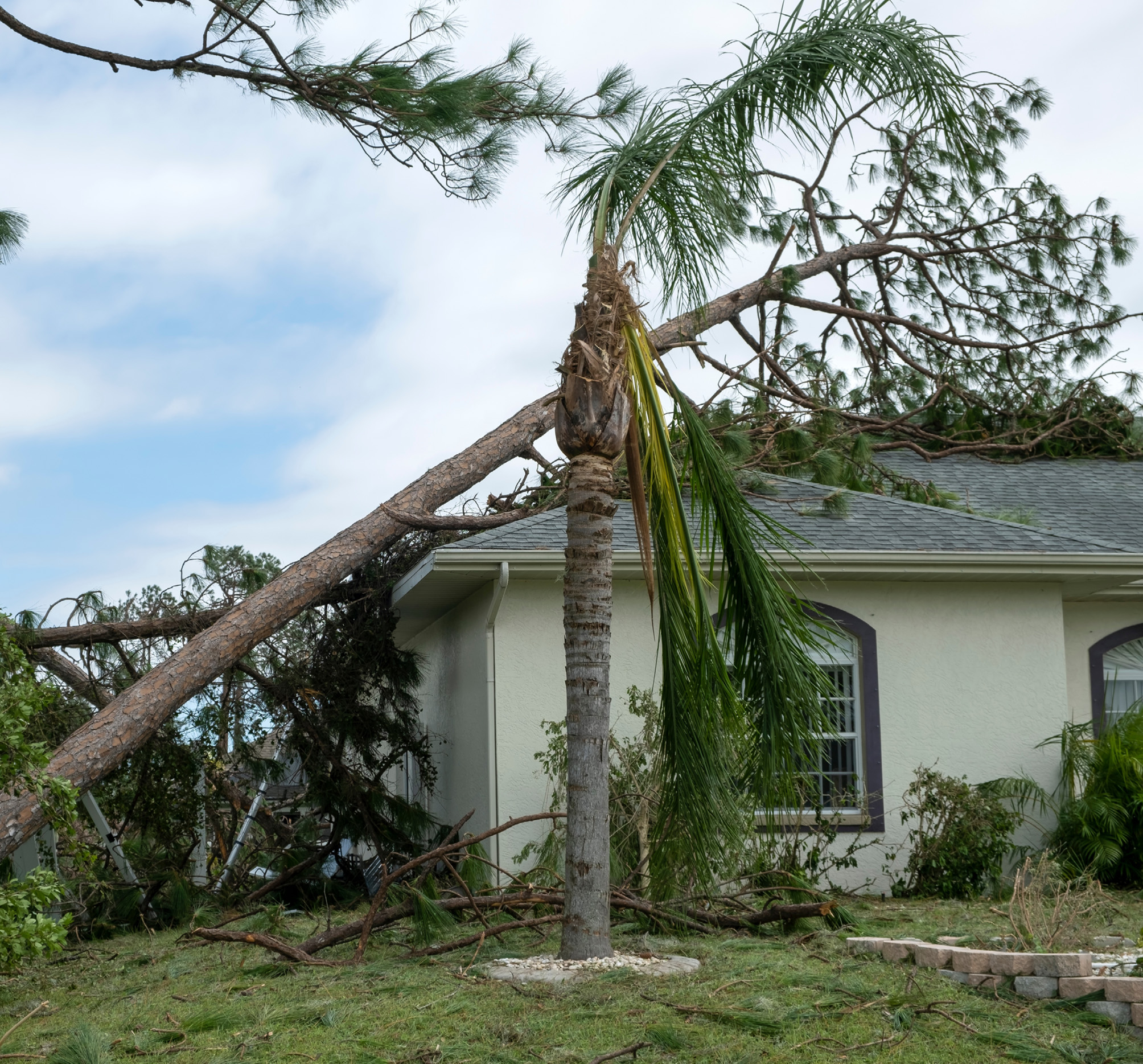
EGA Insights: Role of Adjusters in Navigating Hurricane & Tornado Deployments
Davies’ Specialty Risk Division Executive General Adjusters are elite among Large Loss claims…
-
August 6th 2026
Meet Our EGAs: Mike Klein—Mid-Atlantic Adjuster, Umpire & Roof Regulator
Davies’ Executive General Adjusters are elite among Large Loss & Specialty claims adjusters in the…

-
August 19th 2026
Meet Our EGAs: Jason Smith—Mid-Atlantic Adjuster, Appraiser & Umpire
Davies’ Executive General Adjusters are elite among Large Loss & Specialty claims adjusters in the…
-
September 10th 2026
Meet Our EGAs: Greg Thornburg—Florida Adjuster & CAT Coordinator
Davies’ Executive General Adjusters are elite among Large Loss & Specialty claims adjusters in the…

-
September 23rd 2026
Meet Our EGAs: Greg Lingerfelt—Florida Adjuster & Appraiser
Davies’ Executive General Adjusters are elite among Large Loss & Specialty claims adjusters in the…
-
October 6th 2026
Meet Our EGAs: Kyle Markowitz—National General Adjuster
Davies’ Executive General Adjusters are elite among claims adjusters in the U.S., handling…